Company E · Coating equipment

Coating equipment data integration and shop-floor kiosks

Coating PLC data was collected for quality monitoring, while kiosks presented equipment status and work instructions.

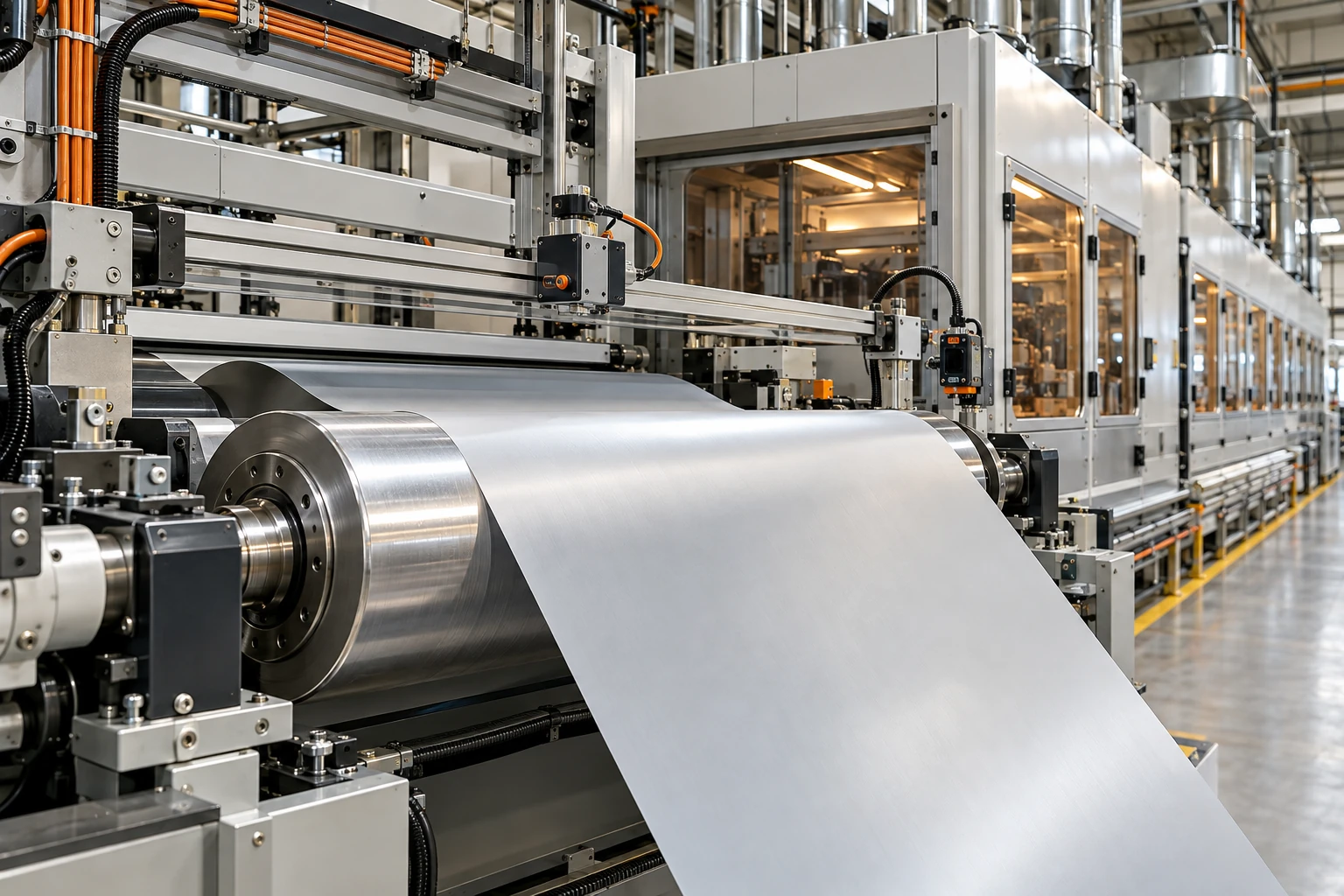
A roll-to-roll coating line with process sensors and transport rollers — AI-generated illustration
IndustryCoating equipment
Connected dataPLC signals, quality variables, equipment status, work instructions, and shop-floor input
Measured result30% less equipment downtime and 50% faster shop-floor data entry

Implementation

Equipment data collection and operator kiosks were connected into one operating flow.

Outcome

Real-time visibility into equipment anomalies let teams respond sooner, cutting downtime by 30%, while operators checking status and instructions directly on the kiosk cut data-entry time by 50%.

30% less equipment downtime and 50% faster shop-floor data entry

Validation method

Downtime records and operator data-entry time were compared for equivalent periods before and after implementation.

Terms used in this case study

Definitions follow the IYULAB manufacturing glossary.

  • PLC A PLC is the industrial controller that actually runs a machine. It reads sensor inputs, applies fixed logic and drives outputs — and it already holds most of the numbers a factory wants to measure.
  • Edge Gateway An edge gateway sits close to the equipment, collects data across incompatible protocols, normalises it and forwards it to upstream systems.
  • SPC Statistical Process Control (SPC) watches the variation in measured values statistically so that a drifting process is caught before it produces defects.

Related implementation guides

Step-by-step articles on the same topics.

  • Getting data out ofolder equipment "Our machines are too old for that" is a verdict usually reached before anyone surveys. In practice a large share already emit a signal that can be read.
  • Shop-floor entrypeople actually use Systems that go live and then go unused are common. The cause is design, not willingness. When entry increases and nothing comes back, no system holds.

Quick Answers

Key answers about this implementation

The connected data, operational change, and validation basis at a glance.

What data was connected?

PLC signals, quality variables, equipment status, work instructions, and shop-floor input

What changed operationally?

Equipment data collection and operator kiosks were connected into one operating flow.

How was the result validated?

Downtime records and operator data-entry time were compared for equivalent periods before and after implementation.

Sources and standards

Terms and procedures on this page follow the public standards and official sources below. Figures are as of each source's publication date.

Key facts
TopicCoating equipment data integration and shop-floor kiosks | IYULAB
SectionCase Studies
Standards appliedISO 9241-110:2020, Interaction principles · ISO 22400-2:2014, Key performance indicators for manufacturing operations management · ISA-95 (IEC 62264), Enterprise-Control System Integration
Public recordGS certification grade 1 of 2 grades · 7 patents registered
Reviewed byIYULAB engineering team
Last updated

Public record: GS certification, grade 1 of 2 grades (U-CMMS 3.0, Telecommunications Technology Association) · 7 patents registered (10-2141840, 10-2141847, 10-2147747, 10-2354546, 10-2408497, 10-2408501, 10-2698341; searchable by number on KIPRIS) · Certifications and patentsReviewed by the IYULAB engineering team · Last updated:

Imagery: AI-generated scenes illustrating the subject of this page.

KR KO